Tanzanite: why it can look blue or violet
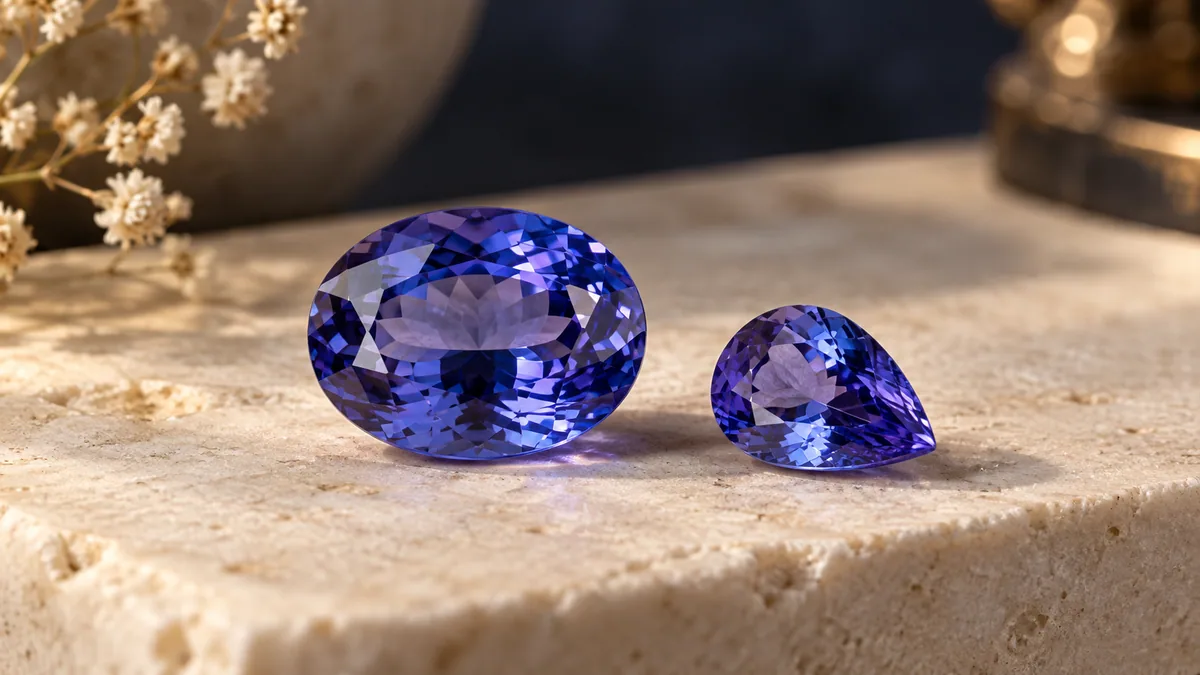
A blue photograph and a violet one do not necessarily show different tanzanites. Viewing direction matters greatly for this gem. Selecting it requires more than choosing the most saturated gallery image.
Colour and orientation
Tanzanite is the blue-to-violet variety of zoisite, associated with Merelani in Tanzania. It shows pleochroism: different colours in different crystallographic directions. Heating is commonly used to achieve commercially sold colours. A heated stone can be natural; treatment is different from laboratory production.
What to request in a video
Ask for slow movement, front and side views, followed by ordinary lighting. Avoid comparing different sellers' images when lighting and white balance differ. Record dimensions: greater weight does not necessarily create a proportionately larger face-up area.
For earrings, check the pair's match under the same light. For a pendant, view the colour against skin and the intended metal. These observations address appearance without replacing identification.
A documented choice
Request the stone's identity, disclosed treatments and condition information. A commercial grade such as “AAA” is not a universal laboratory scale. Ask which specific criteria the seller uses.
Tanzanite also has particular wearing requirements. Read our tanzanite ring guide or explore tanzanite valuation.
Sources and further reading
Research: 16 September 2026. An informative editorial guide; identifying a gemstone requires examination of the individual specimen.