Proportions, polish, symmetry: the three grades behind “cut”
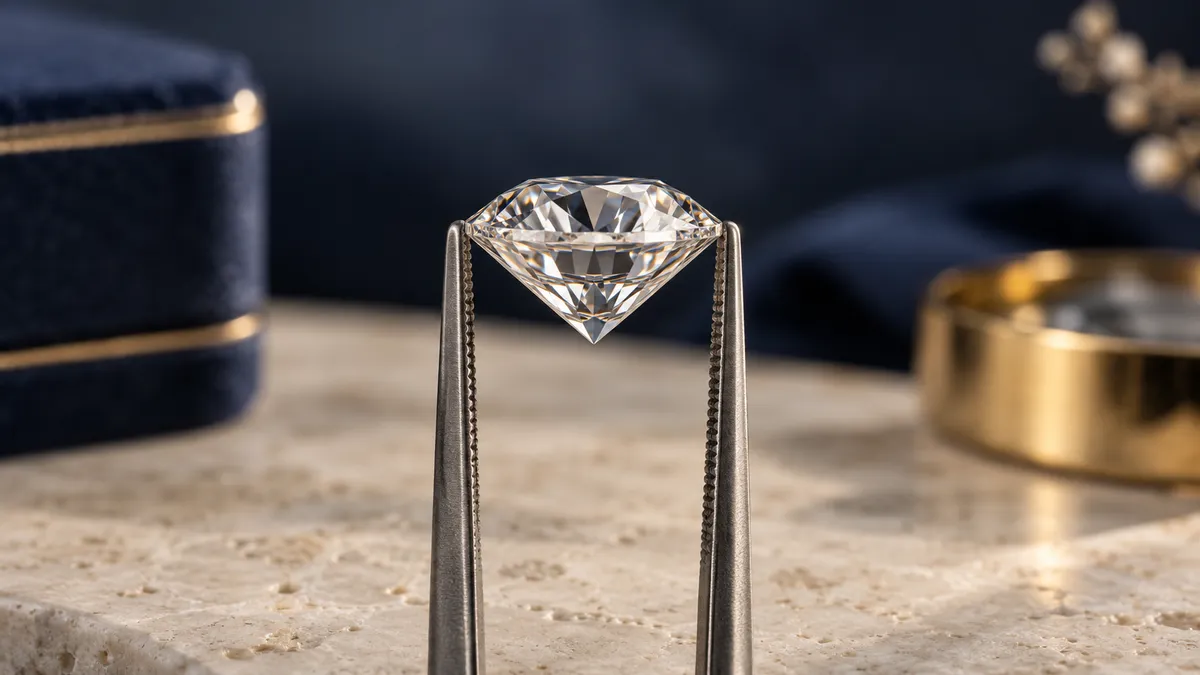
On an HRD Antwerp report, cut has three separate grades on the Excellent, Very Good, Good, Fair scale: proportions (which create brilliance and fire), polish (the finish of the facets) and symmetry (how regularly the diamond is cut). Proportions matter most for appearance. Polish and symmetry indicate how carefully the stone was worked.
Of the four Cs, cut is the only factor that depends entirely on people. Colour, clarity and weight come from nature; the way the stone was cut decides how much of them reaches the eye. That is why HRD Antwerp gives not one grade for cut, but three.
Proportions: the geometry of light
Proportions describe the relationships between the parts of the stone: table diameter, crown and pavilion angles, total depth, girdle thickness. They decide how light travels inside:
- Brilliance: white light reflected back to the viewer.
- Fire: light dispersed into colours.
- Scintillation: the play of bright and dark areas as the stone moves.
A pavilion that is too deep or too shallow lets light “leak” out of the back; the stone looks dark in the centre or glassy. That is why proportions are the most important grade for appearance. HRD grades them for round brilliants; for fancy shapes (oval, pear, princess) the report usually gives only polish and symmetry.
Polish: the finish of the facets
Polish shows how smooth the surfaces are. Fine polishing lines, scratches or burnt edges are visible under magnification and, in serious cases, slightly reduce brilliance. In a stone with Good or Very Good polish, the difference is usually invisible to the naked eye.
Symmetry: the regularity of the cut
Symmetry describes how precisely the facets are placed and how regular the outline is: a centred table, a girdle of even thickness, facets meeting at exact points. Large deviations can affect how light is distributed; small ones are mostly a matter of workmanship.
The grading scale
HRD uses four steps for each of the three grades: Excellent, Very Good, Good, Fair. For round brilliants, GIA also gives an overall cut grade, with one extra step (Poor). Do not mix the systems: an HRD “Excellent” for proportions is not the same as a GIA “Excellent” for overall cut, even if they often coincide.
What to choose, in practice
- Priority: proportions. For a round brilliant, look for Excellent or Very Good.
- Very Good polish and symmetry are enough for a beautiful stone; Excellent on all three (“triple excellent”) carries an extra price.
- For fancy shapes, where proportions are not graded, look at the stone: dark areas in the centre (the “bow-tie” effect in ovals or pears) can only be seen on the specimen.
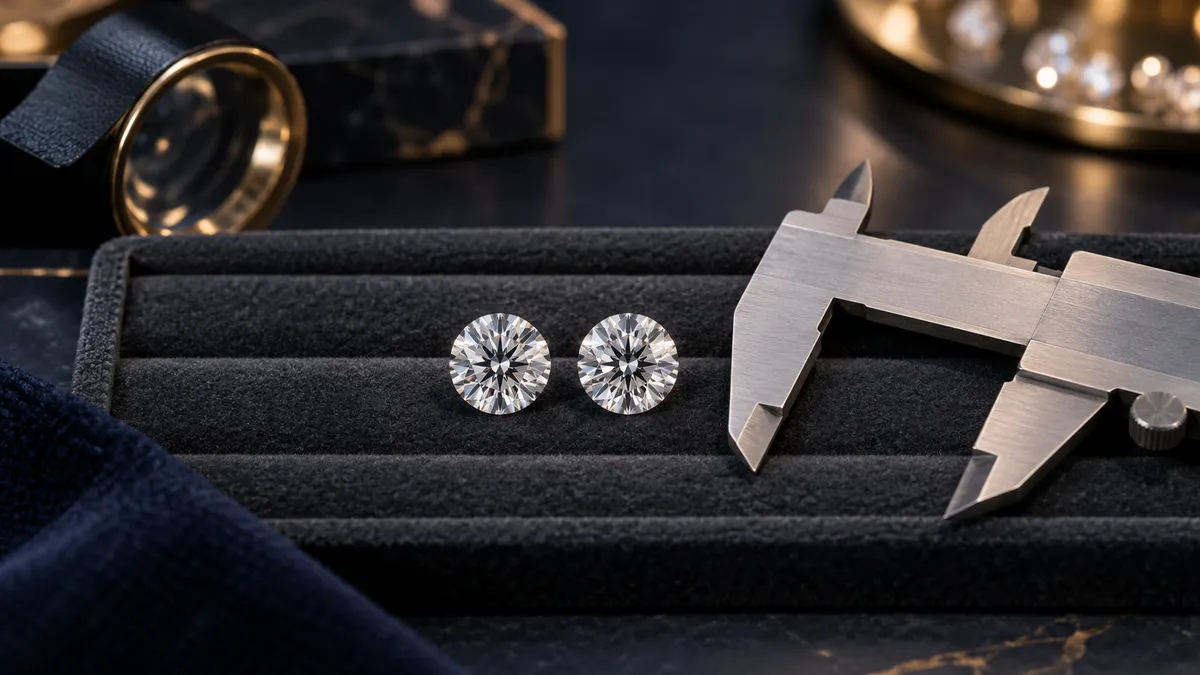
- The measurements on the report help you compare: two stones of the same weight can have different diameters because of their proportions.
For very precise cuts there is also the “hearts and arrows” test; we have written separately about Hearts & Arrows. For context on the other criteria, see the 4Cs of a diamond.
Sources and further reading
HRD Antwerp — Frequently asked questions
Research: 12 October 2026. An informative editorial guide; identifying a gemstone requires examination of the individual specimen.