Spinel: a gemstone with its own identity, once mistaken for ruby
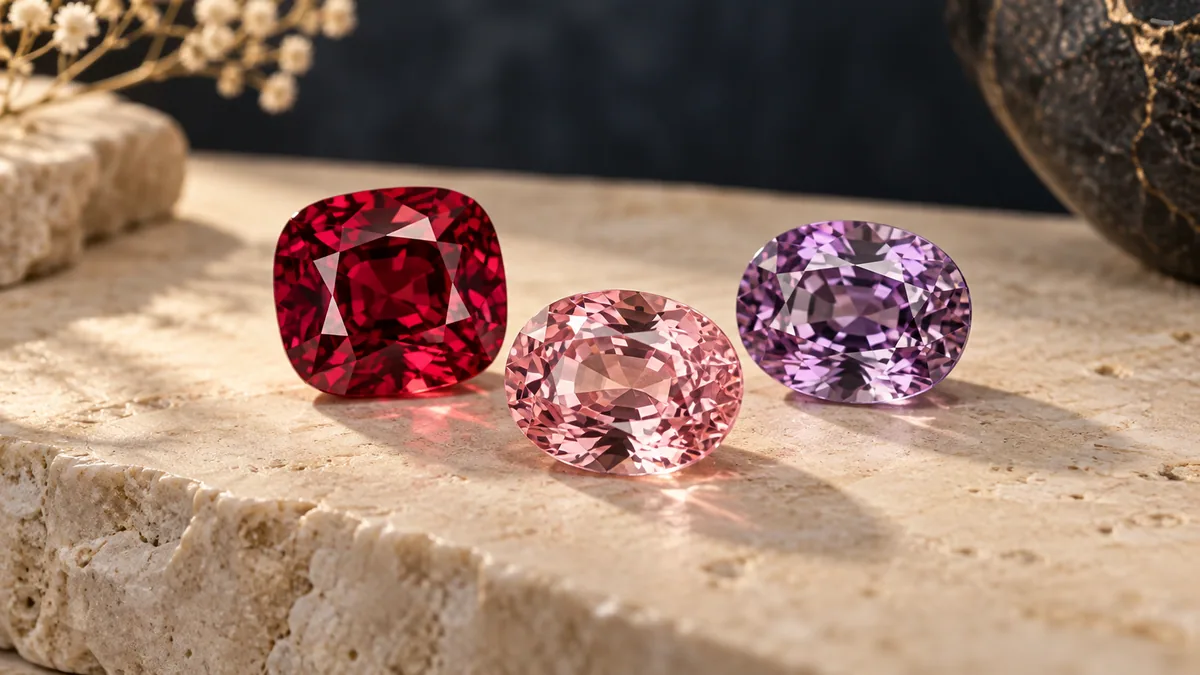
A red gemstone is not automatically ruby. Spinel has a long jewellery history, including pieces once described as rubies. Today it can be selected for its own appearance, with correct identification.
Its characteristics
Spinel is a different mineral from corundum and occurs in red, pink, violet, blue and other colours. Synthetic spinel also exists. Naming the mineral without specifying natural or laboratory origin leaves an offer incomplete.
What to compare
View its colour under ordinary light and observe brightness as it turns. Request dimensions as well as weight. For earrings, focus on matching; for a centre stone, check face-up appearance and profile in the intended setting.
A trade description such as “cobalt spinel” needs relevant supporting information, not just a vivid blue photograph. Ask what the report actually states and who applied the term.
A practical choice
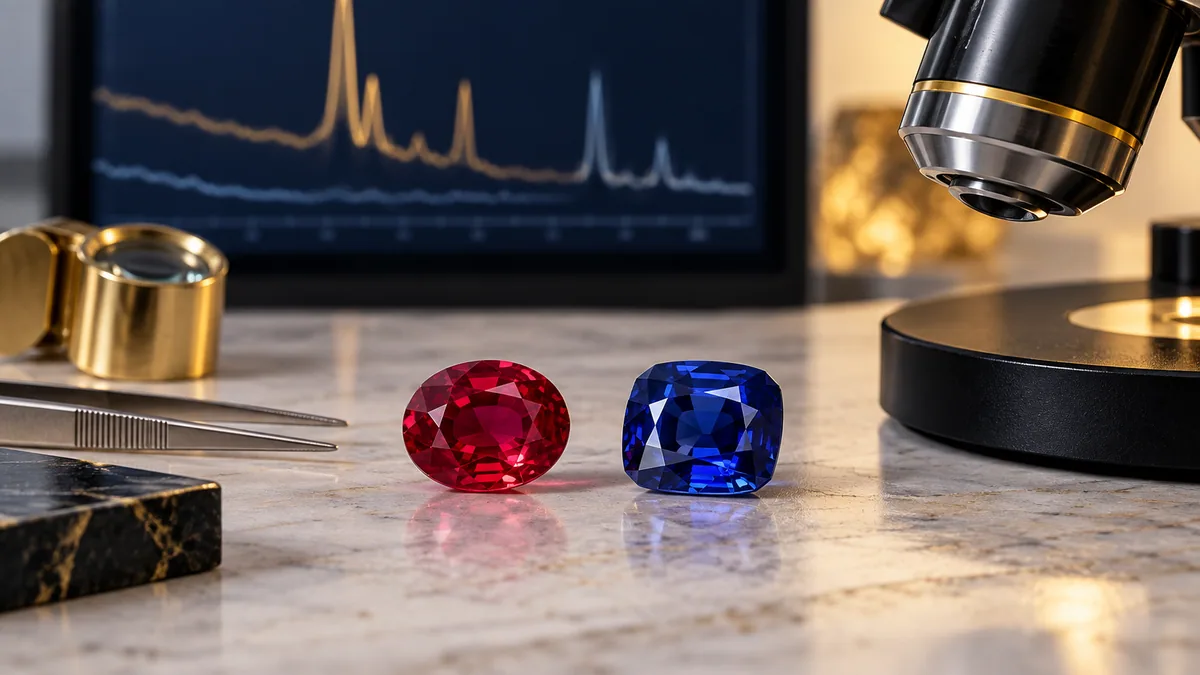
For a red ring, compare spinel and ruby for style and appearance, then assess their documents separately. Do not assume every spinel must be inexpensive or that the word ruby alone justifies a price difference.
Keep the invoice, identification and photographs together. Read ruby, spinel or garnet for a broader comparison, or request examination of an unidentified red stone.
Sources and further reading
Research: 16 September 2026. An informative editorial guide; identifying a gemstone requires examination of the individual specimen.