GIA and laboratory-grown diamonds: the 2025 Premium / Standard change
Gemmological documents evolve. Reports issued in different periods should not be compared solely by form appearance. One relevant change concerns GIA's laboratory-grown diamond services.
What GIA announced
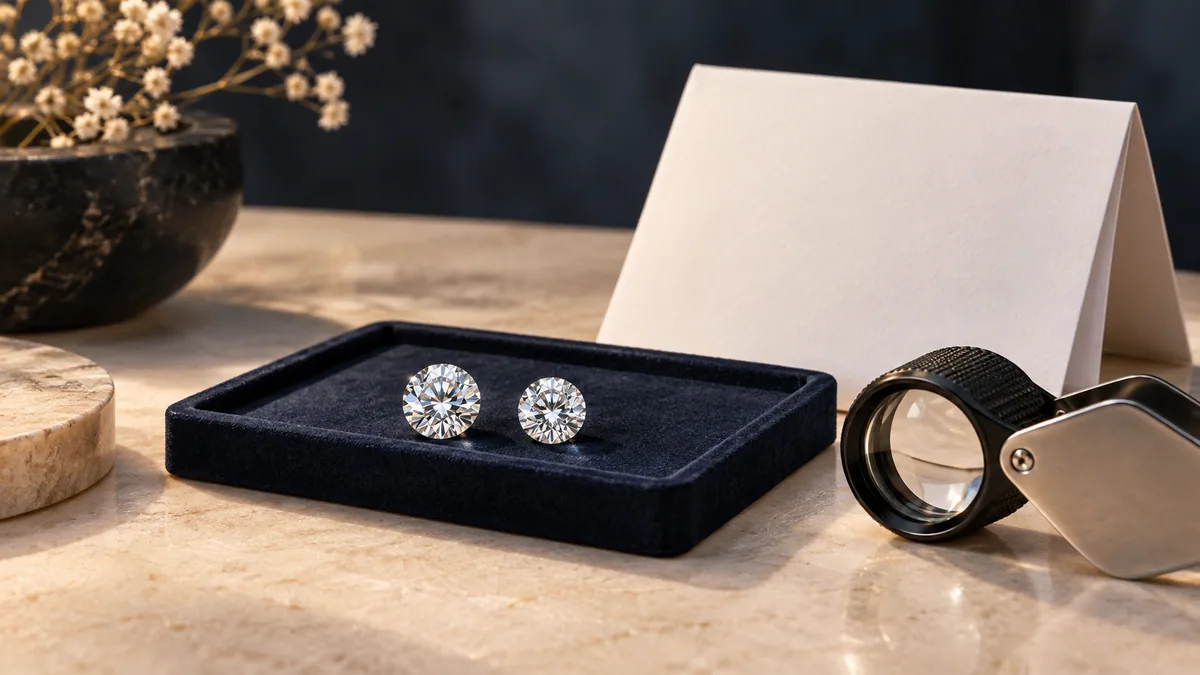
On 26 August 2025, GIA announced a revised service for D–Z laboratory-grown diamonds, launching on 1 October 2025. It uses Premium and Standard based on overall assessment of colour, clarity and cut. Stones not meeting minimum Standard criteria do not receive this assessment. This concerns GIA's service and this diamond category, not a requirement for every laboratory.
Reading an offer
Check the laboratory, date and service name. Do not convert Premium yourself into assumed individual grades for a different report type. For an older document, ask how its original system works rather than treating age as evidence of a problem.
Do not transfer laboratory-grown diamond terminology to natural diamonds. Identity must remain explicit throughout, including on the invoice.
Three practical checks
- Identify the issuer and verify through the laboratory's official channel.
- Compare identification data with the examined stone; a valid number alone does not prove physical correspondence.
- Clarify document terminology before comparing offers.
A reporting change does not establish resale proceeds or replace setting inspection. These remain separate questions.
Editorial context: written in September 2026 using GIA's 2025 announcement. Read about natural and laboratory-grown diamonds and the 4Cs.
Sources and further reading
Research: 16 September 2026. An informative editorial guide; identifying a gemstone requires examination of the individual specimen.