The diamond 4Cs: comparing two stones with confidence
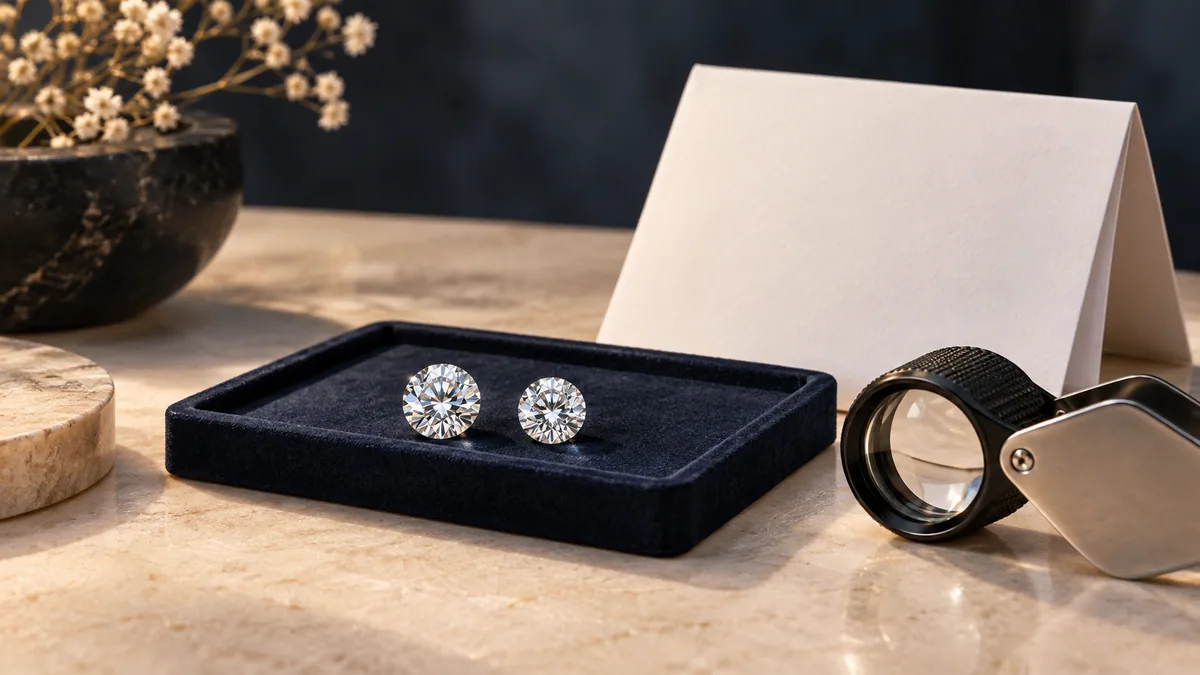
Two diamonds of the same weight may look different on the hand. A useful comparison starts with what you observe in the stone, then continues with its gemmological report. A single grade cannot summarise every characteristic of a piece of jewellery.
What each C describes
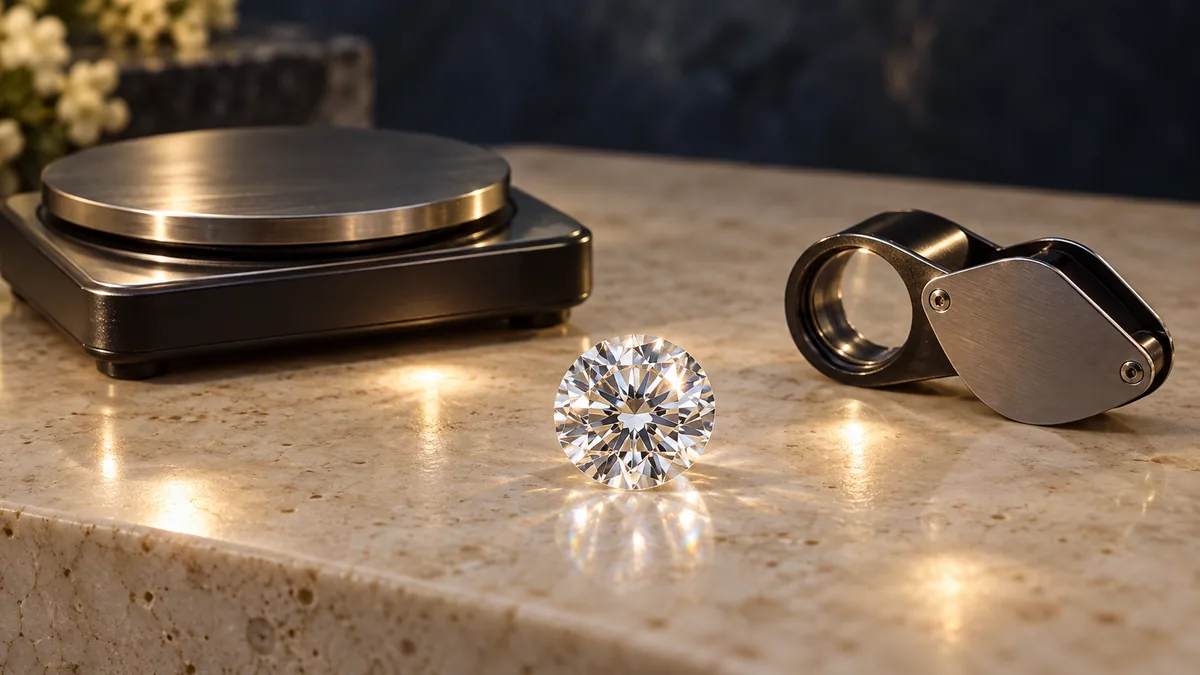
Carat is weight, not diameter: one carat equals 0.2 grams. Colour describes colour; the D–Z scale measures its presence in that range. Clarity concerns internal and surface characteristics. Cut concerns how a stone is fashioned, including proportions and finish. An oval or round shape is not, by itself, a cut grade.
A meaningful comparison
Compare stones of the same declared origin: natural or laboratory-grown. Record their weights, millimetre dimensions, issuing laboratory and report observations. View them clean, under the same lighting, rather than relying solely on enlarged photographs.
For a discreet ring, you may prefer a slightly smaller stone. That is a design choice, rather than proof that a particular combination of grades is universally best. With an elongated shape, also observe how bright and dark areas change as you move the jewellery.
What a report does not tell you
A grading report is not a resale promise and does not automatically describe the setting's condition. Check the claws, any damage and whether the document corresponds to the stone. Keep the invoice and report together.
Read our guide to natural and laboratory-grown diamonds. If you already own the jewellery, arrange a diamond examination.
Sources and further reading
Research: 16 September 2026. An informative editorial guide; identifying a gemstone requires examination of the individual specimen.