Ametrine: violet and yellow in one gemstone
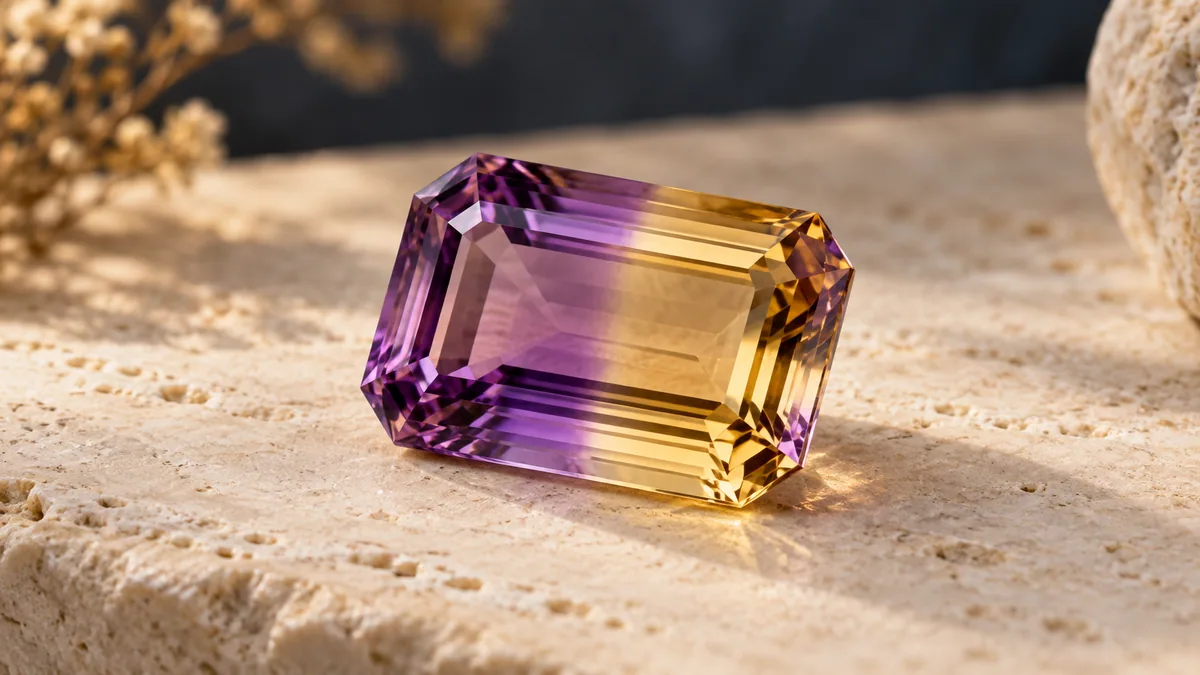
A two-coloured stone can centre a simple design. With ametrine, choose a cut showcasing the combination without assuming the pattern itself proves natural origin.
What is ametrine?
Ametrine is quartz with violet and yellow-to-orange zones associated with amethyst and citrine colours. It is not, by definition, two glued halves. Yet a bi-coloured photograph cannot exclude synthetic material or imitations.
Observe colour distribution
Request a front view in neutral light and a video. Observe the boundary and changes during rotation. Equal proportions may suit a geometric design; an asymmetric distribution can be equally expressive.
Establish orientation before mounting. A long rectangle looks different horizontally and vertically. Request a sketch or simple proportion trial beside the metal.
Document the material
Ask for natural or laboratory origin and disclosed treatments. A claimed country needs support, not inference from a known deposit there. Keep pre-mounting photographs if part of the commission records.
Read about amethyst and citrine. Identify an undocumented bi-coloured stone before describing it as natural ametrine.
Sources and further reading
Research: 16 September 2026. An informative editorial guide; identifying a gemstone requires examination of the individual specimen.