Natural or heat-produced citrine: what buyers should know
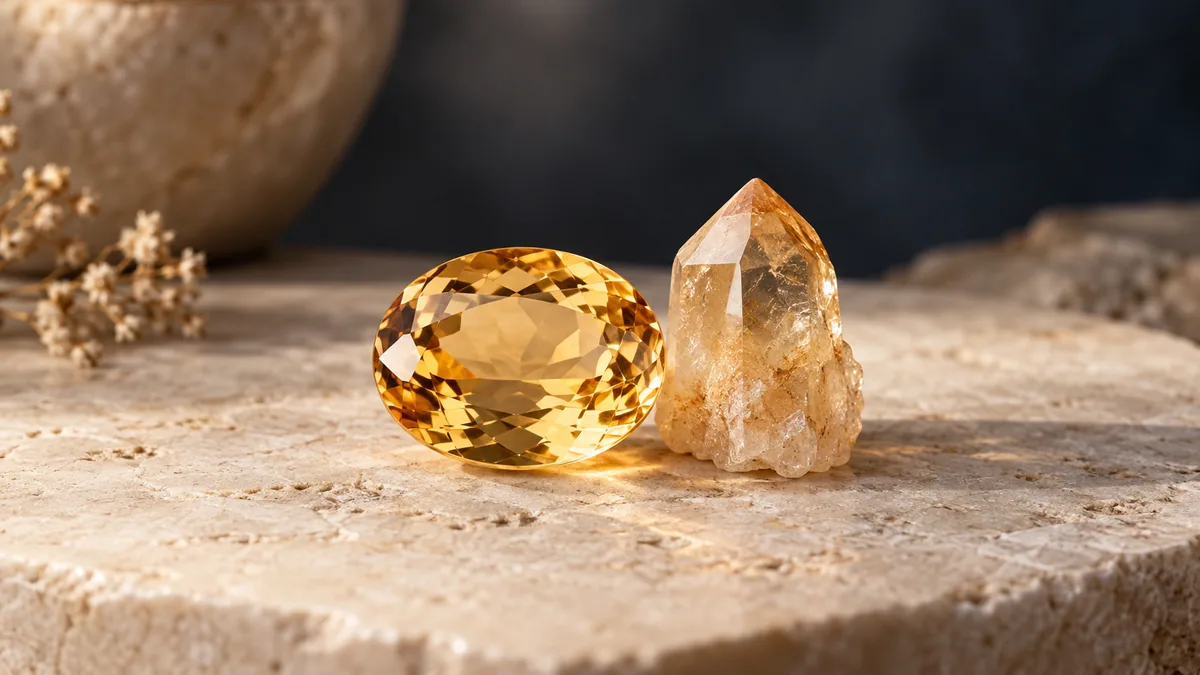
A yellow stone may be advertised as citrine, golden topaz or a fanciful name. First separate mineral identity from how its colour developed.
What is citrine?
Citrine is transparent quartz ranging from pale yellow to brownish orange. Natural citrine is relatively rare; much commercial material results from heating amethyst. Naturally sourced quartz with treated colour differs from a laboratory-grown crystal.
Questions about colour
Ask whether the seller claims natural colour or simply natural material. Read any report's exact wording. Orange does not itself prove heating, nor does pale yellow exclude it: a photograph cannot provide a reliable verdict.
For a set, compare stones side by side. A slight hue difference can suit a graduated design but distract in a pair intended to match. Decide before mounting.
Why the correct name matters
Citrine and topaz are different minerals. An old family description or shop label should not be copied into a new document without verification. Keep the exact identity and disclosed treatments on the invoice.
You can choose treated citrine for its appearance if you know what you are receiving. Read our topaz guide or request identification if existing information conflicts.
Sources and further reading
Research: 16 September 2026. An informative editorial guide; identifying a gemstone requires examination of the individual specimen.