Amethyst: choosing colour and verifying natural origin
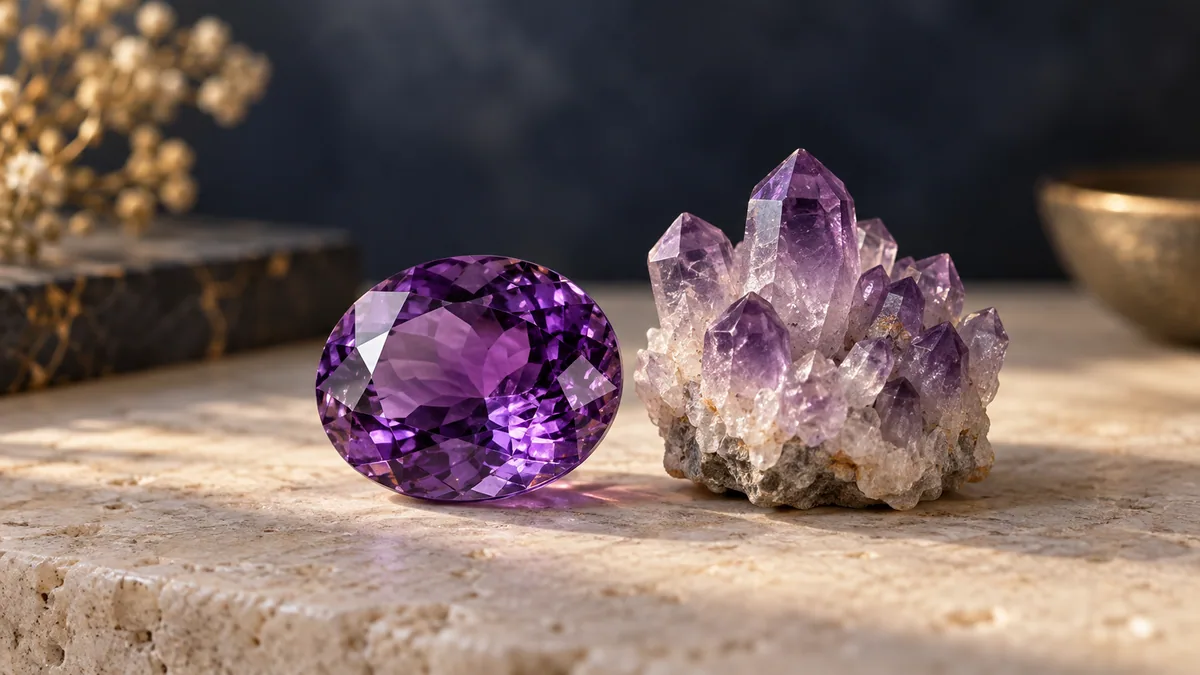
Amethyst may be chosen for subtle violet or intense colour. An accessible price or large size does not remove the need for an accurate material description.
What kind of gem is it?
Amethyst is violet quartz. Colour distribution, transparency and cutting contribute to its appearance. Synthetic amethyst exists too; a very clean stone cannot be declared natural or synthetic merely because inclusions are absent from a photograph.
Observe colour overall
Rotate the stone and check whether light and dark zones work harmoniously face-up. A photograph may show only a favourable facet reflection. Request an overall view from a normal wearing distance.
For a large pendant, ask for the complete setting dimensions. A stone appealing on a table may be too heavy or long for your necklace. Check paired earrings under the same light.
Description and purpose
A decorative purchase may start with taste and comfort. If collecting natural material, request supporting documentation. Stories about energy do not constitute gemmological explanations or quality evidence.
The quartz family also includes citrine and bi-coloured ametrine. Their names describe colour differences, not universal value rankings. Examine an unidentified item before assigning provenance.
Sources and further reading
Research: 16 September 2026. An informative editorial guide; identifying a gemstone requires examination of the individual specimen.