Tourmaline: rubellite, indicolite and bi-coloured stones explained
Tourmaline is appealing when you want a specific colour or unusual combination. Yet trade names can make its varieties seem unrelated.
One mineral group, several names
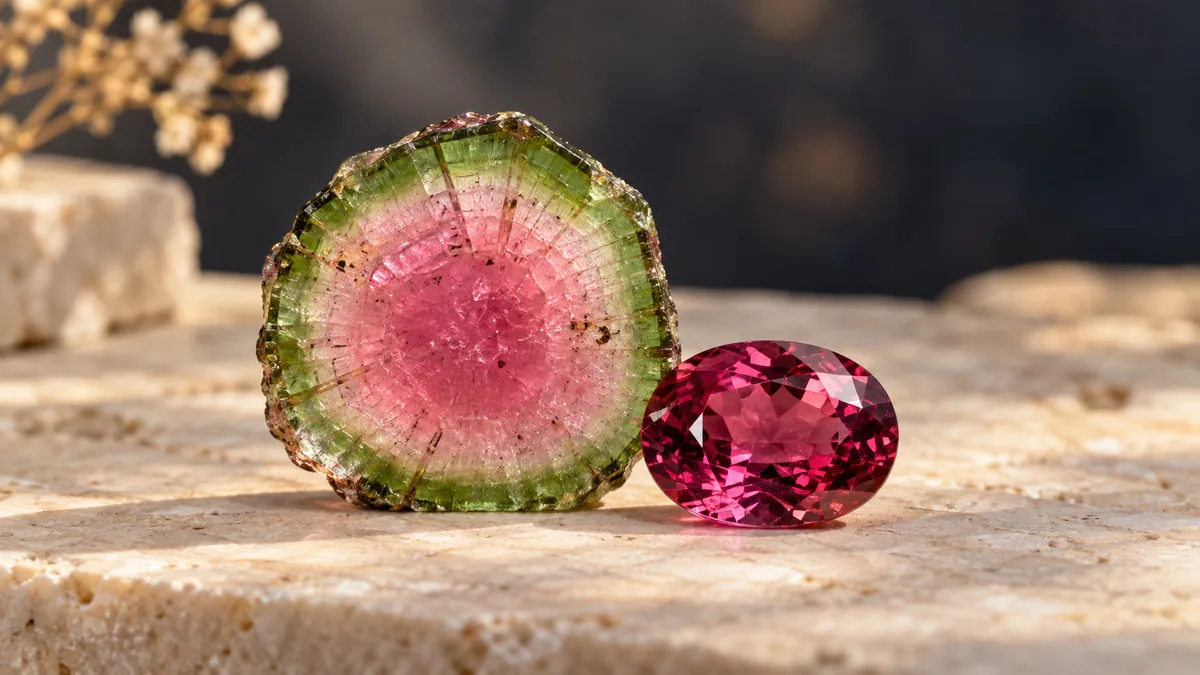
Tourmalines form a group of related minerals. Rubellite commercially describes pink-to-red tourmaline; indicolite describes blue tourmaline. Bi-coloured stones have distinct zones, while “watermelon” typically has a pink centre and green outer area. These names describe appearance rather than a quality scale.
Viewing a bi-coloured stone
Observe the colour boundary and whether the cut presents it well. Equal division is not necessarily best for every design. View it in its intended jewellery orientation.
For a crystal slice, inspect edges and the proposed setting. An irregular outline may be part of its charm, but the setting must suit the actual shape. Request clear photographs of both sides before approving a design.
Written clarification
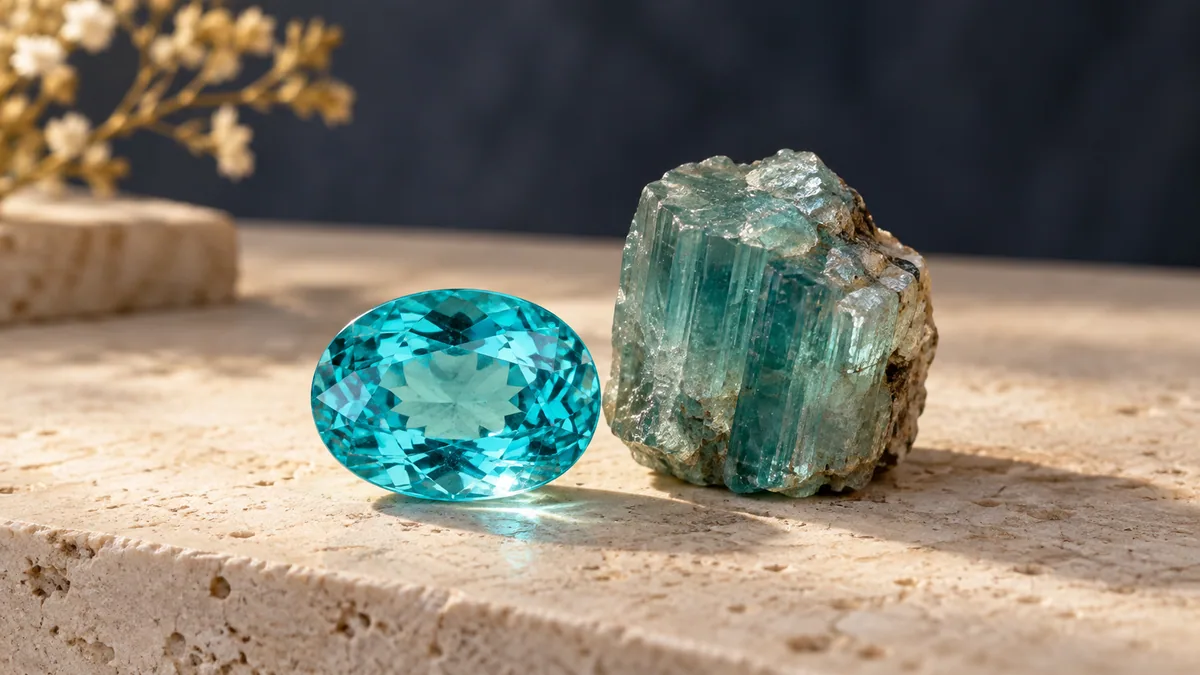
Ask for identity, treatments, dimensions and weight. “Rare colour” needs context and is not a promise of future value. If Paraíba is used, ask separately about composition and origin.
Read our Paraíba tourmaline guide. For an uncertain description, start with gemmological identification.
Sources and further reading
Research: 16 September 2026. An informative editorial guide; identifying a gemstone requires examination of the individual specimen.