Natural, stabilised or imitation turquoise: reading the offer
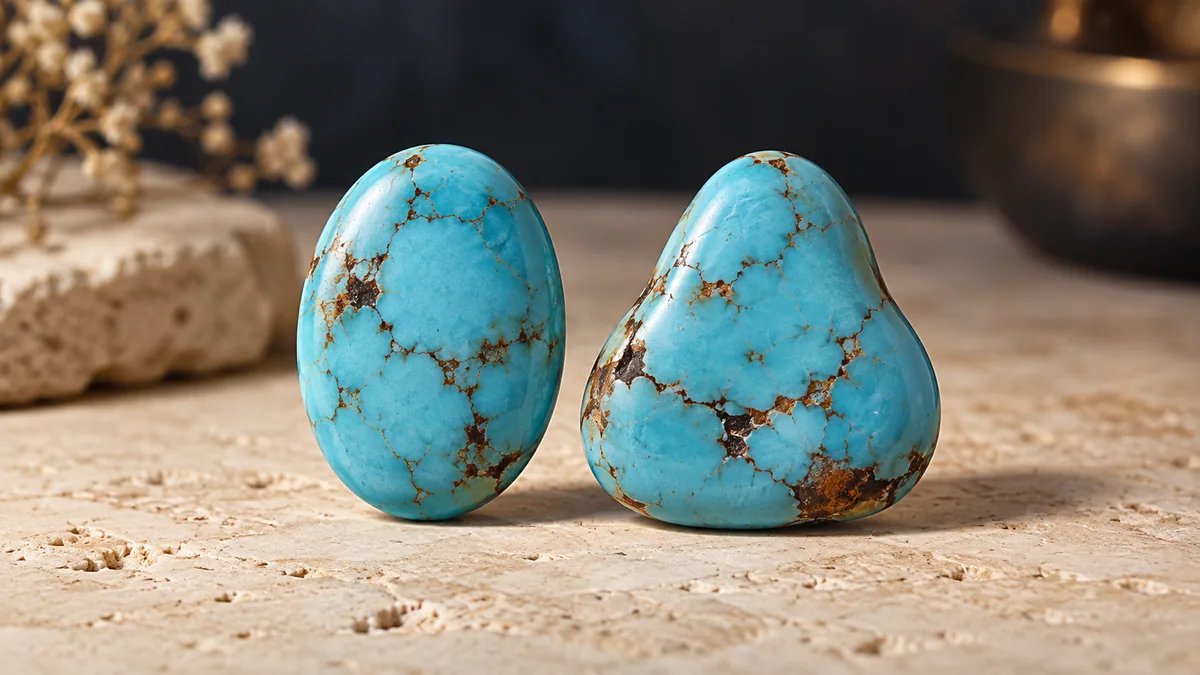
A blue stone with dark veining evokes turquoise, but the pattern is only a visual clue, not evidence of untreated natural material.
Material and treatment are separate
Turquoise is generally opaque and porous, ranging from blue to green. It can be impregnated to improve durability or appearance and may be dyed. Imitations also exist. “Stabilised” should explain treatment rather than avoid naming the underlying material.
Specific questions
- Is this identified turquoise or an imitation material?
- Has impregnation, dyeing or another intervention been used?
- Is it solid or reconstituted material?
- Which care instructions apply?
Request written answers. Attractive veining does not prove a famous mine; geographic claims need support separate from the design story.
Choosing jewellery
For a strand, inspect colour harmony and drilling quality. For a ring, check the edge and setting. A disclosed treatment may suit your needs; problems arise when descriptions create different expectations.
Do not test dyeing using acetone or scratches: both stone and setting may be affected. Start with gemmological identification. For another opaque blue material, read our lapis lazuli guide.
Sources and further reading
Research: 16 September 2026. An informative editorial guide; identifying a gemstone requires examination of the individual specimen.