Lapis lazuli: blue, calcite and sparkling pyrite
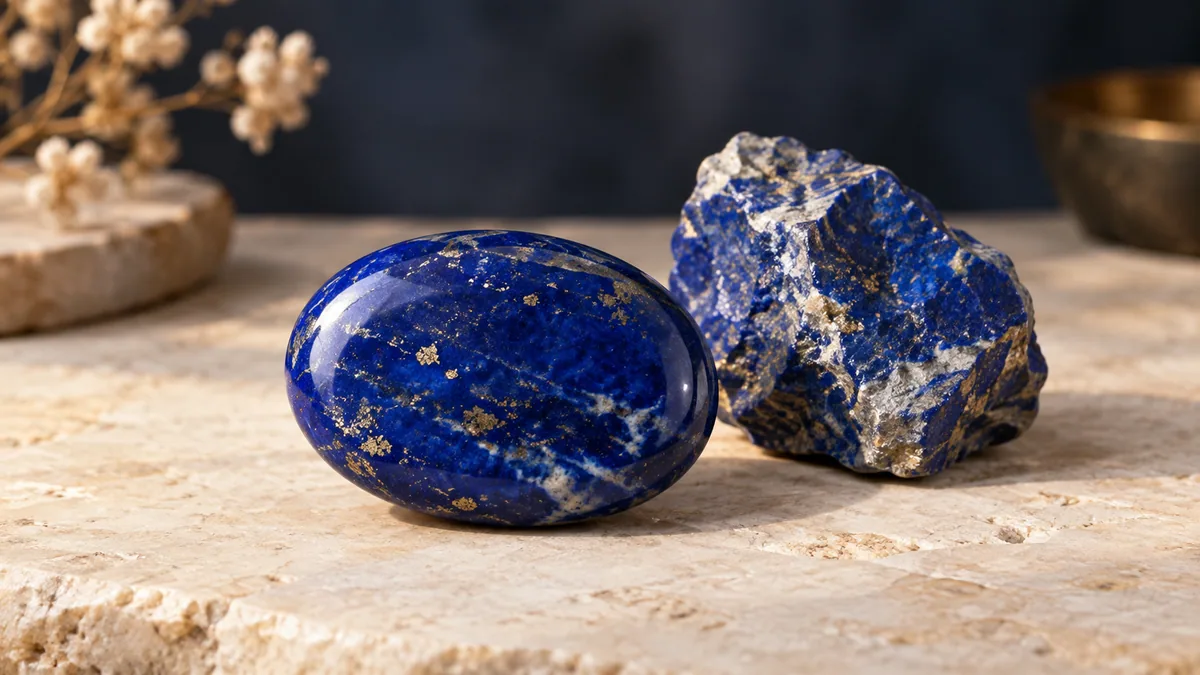
Lapis lazuli can show uniform blue or a varied pattern with pale areas and metallic flecks. These components belong to its identity but need correct interpretation.
A rock, not a single crystal
Lapis lazuli is a mineral aggregate, principally lazurite, calcite and pyrite. Lazurite contributes blue, calcite can create white areas, and pyrite gives metallic sparkle. Those particles are not gold. Their proportions and distribution affect appearance.
Choosing the pattern
View the whole item rather than only its bluest area. For a pendant, see whether the natural pattern works in the setting's orientation. With earrings, decide whether you want close matching or intentional visible variation.
For carvings, request back and base photographs. A frontal view does not reveal every crack, repair or material difference. Separate workmanship assessment from rock quality claims.
What to verify
Ask about treatments and material identity. Intense colour alone does not prove an unaltered appearance, and metallic flecks alone cannot exclude imitations.
Do not test dyeing at home with solvents. Request gemmological identification if it matters to a purchase or description. Compare with turquoise treatments for another opaque blue gem.
Sources and further reading
Research: 16 September 2026. An informative editorial guide; identifying a gemstone requires examination of the individual specimen.