Star sapphires: understanding the star and what to check
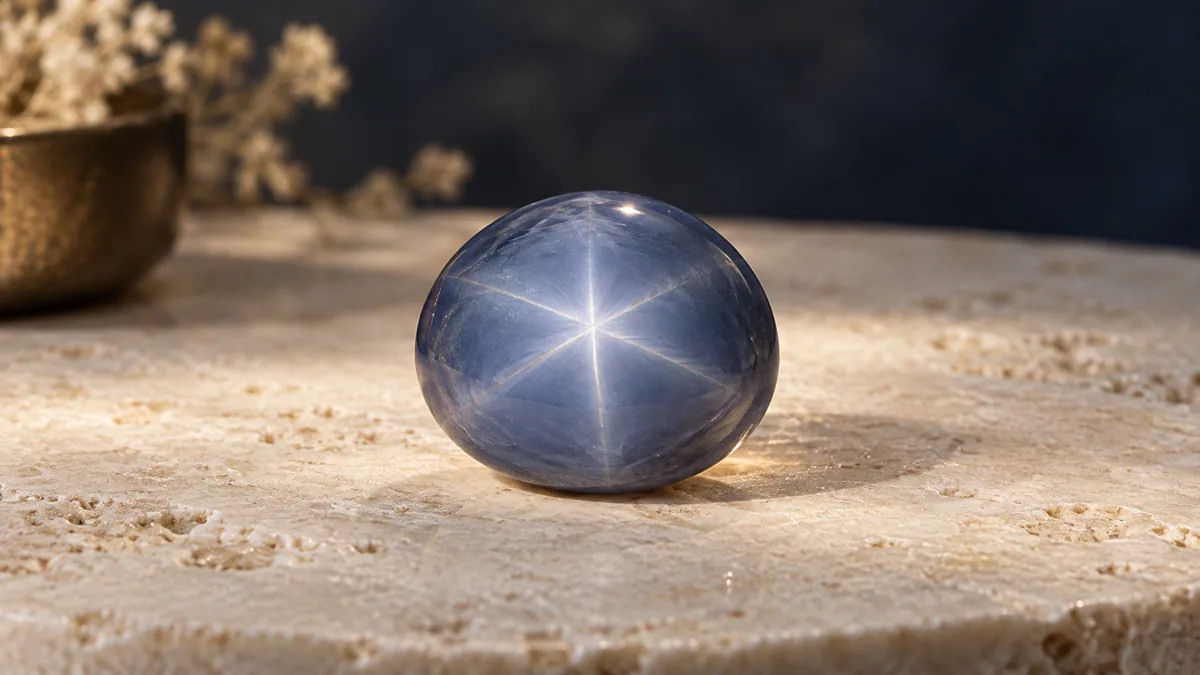
A star sapphire offers a different display from a faceted stone: the effect appears on a rounded surface and changes as the light moves. Appreciating it requires movement, not just a still image.
What is asterism?
Oriented inclusions and suitable cabochon cutting can produce a star, often with six rays. Its position and definition matter when assessing the stone. Star sapphires can also be laboratory-produced; a star does not certify natural formation.
A useful demonstration
Request a continuous video with a small light source moving above the stone. Watch whether the rays are visible and meet clearly, and how the stone looks without emphasis on the effect. Diffuse light may weaken the star without determining material identity.
For a ring, examine the cabochon's profile. A high dome may look impressive but needs to be comfortable. If already mounted, request side photographs and clarification of whether the weight was measured or estimated.
What to document
- Gemmological identity and natural or laboratory-grown origin.
- Detected or declared treatments.
- Dimensions and photographs identifying the item.
- Setting description and condition observations.
Never use a needle or scratch test to “verify the star”. Observing the effect and identifying the material are separate steps. Read our sapphire colour guide to compare varieties correctly.
Sources and further reading
GIA — gemmological reference · GIA — gemmological reference
Research: 16 September 2026. An informative editorial guide; identifying a gemstone requires examination of the individual specimen.