Sapphire is more than blue: colours and trade names
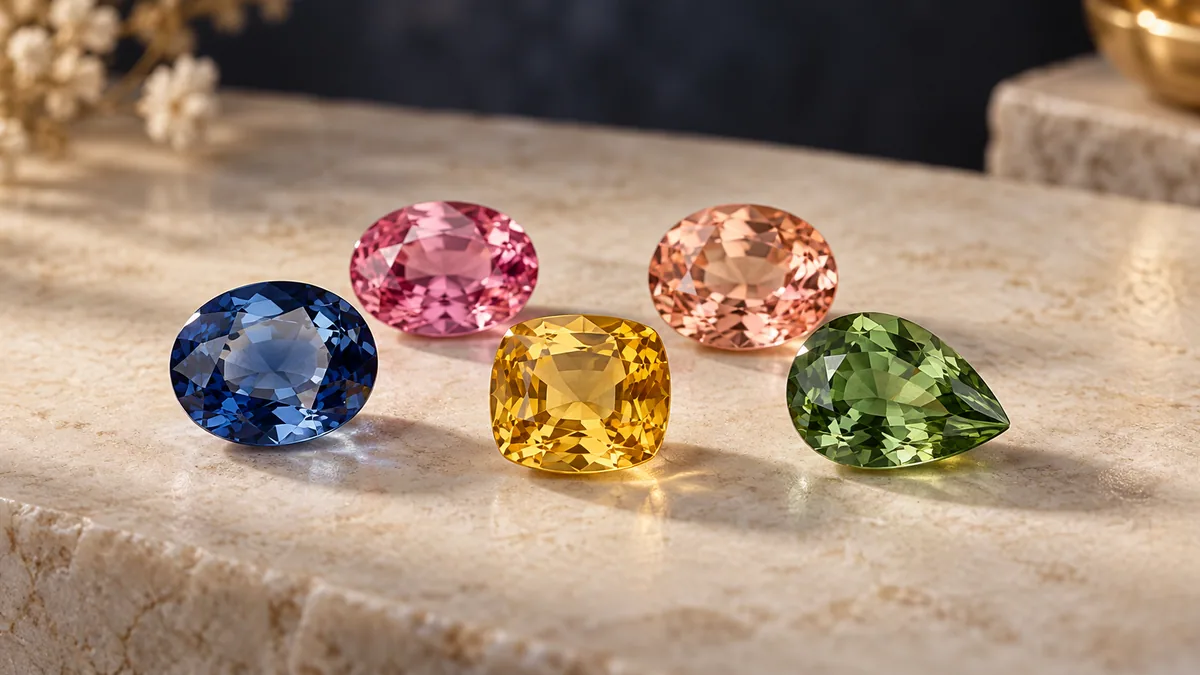
Sapphire often brings blue to mind, but choosing jewellery can start with a wider palette. A gemstone's name and a colour description provide different information.
A family of many colours
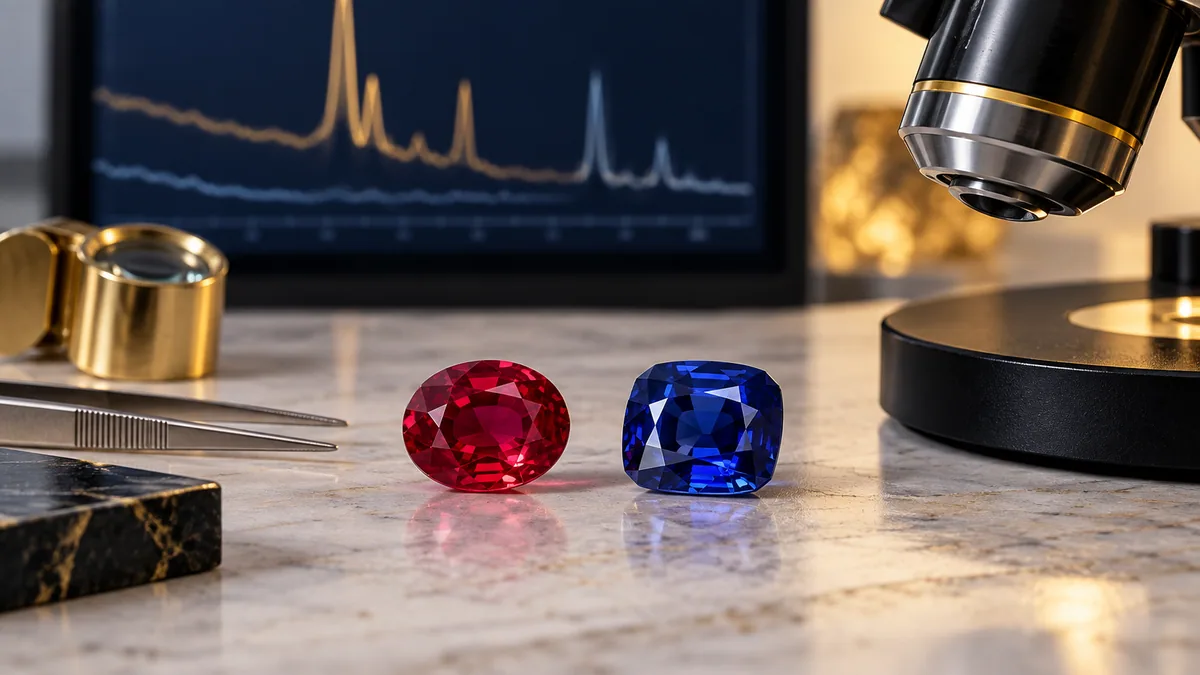
Sapphire belongs to corundum. Apart from the red variety called ruby, gem-quality corundum can be pink, yellow, green, violet and many other colours. Padparadscha is associated with a delicate pink–orange blend; the precise interpretation should be read in the issuing laboratory's context.
Appearance versus trade terminology
“Royal blue”, “cornflower” and other commercial descriptions do not replace identification or independently prove geographic origin. Ask who used the term and whether it actually appears in the stone's document.
Compare sapphires against a neutral background in two ordinary lighting conditions. Record what appeals to you: a lighter blue, a violet hue or a stone that remains bright indoors. These preferences help personal selection more than buying a name alone.
A practical example
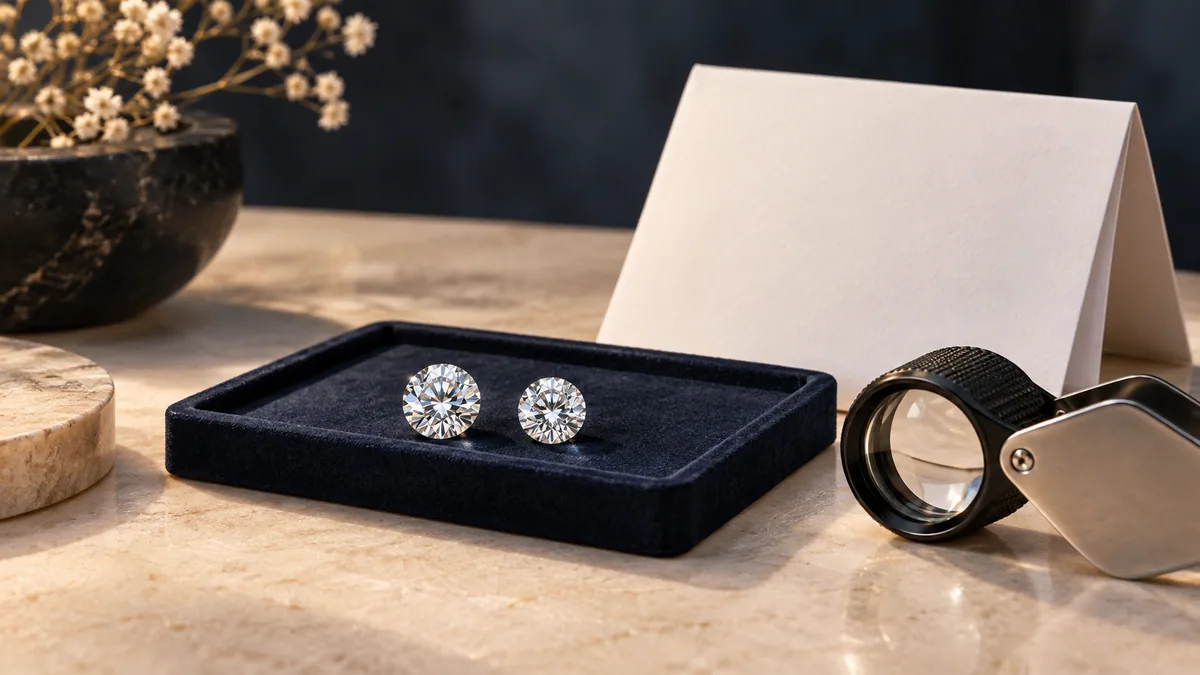
For earrings, start with the pair's visual match. Two stones of similar weight may look mismatched if one is much darker. For a ring, view the stone alongside the intended metal before deciding on the final design.
Always separate identity, treatments and origin. Read about sapphire heating and diffusion, or explore sapphire valuation for a stone you own.
Sources and further reading
Research: 16 September 2026. An informative editorial guide; identifying a gemstone requires examination of the individual specimen.