Heated or glass-filled ruby: why the distinction matters
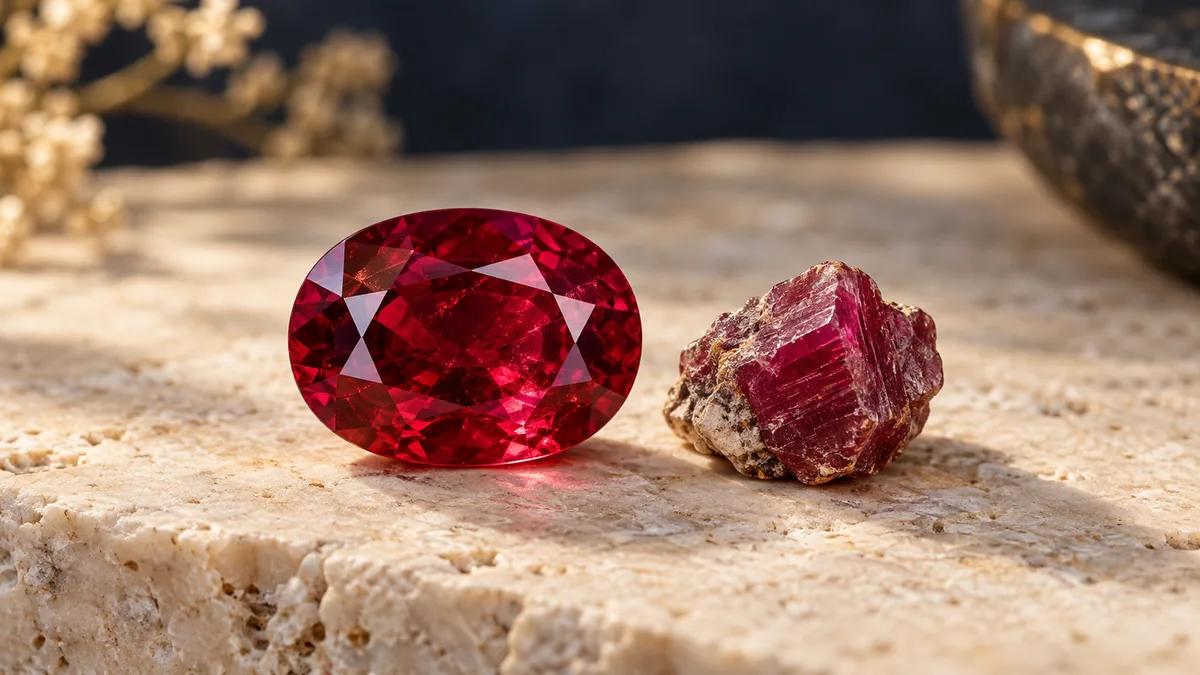
The label “natural ruby” describes how the stone formed. It does not, by itself, explain treatments carried out after mining. Two natural stones can therefore require different comparisons and care.
Two different interventions
Heating can alter a ruby's appearance. Filling fractures with materials such as glass reduces their visibility and may substantially change apparent transparency. A fracture-filled ruby should not be presented as equivalent to a stone without that treatment. Identifying and interpreting treatments requires gemmological examination.
Questions to ask
Rather than “is it good?”, ask which treatments are disclosed in writing, whether the report concerns this exact stone, and what precautions apply during cleaning or repair. Ask the laboratory's terminology to be explained: abbreviations need not mean the same thing across issuers.
If the ring needs resizing in a few years, the jeweller must know about filling before starting. Keeping the documents now can prevent a poor decision later; forgotten verbal information cannot help the workshop.
Care depends on treatment
Fillers can be vulnerable to heat and chemicals. When treatment is unknown, do not assume ultrasonic or steam cleaning is appropriate. Ask for a cleaning method suited to the whole item, especially if it contains other stones.
A disclosed treatment does not automatically make jewellery unusable. It lets you decide whether its appearance, maintenance and price suit your purpose. Read our ruby ring guide.
Sources and further reading
GIA — gemmological reference · GIA — gemmological reference
Research: 16 September 2026. An informative editorial guide; identifying a gemstone requires examination of the individual specimen.