Choosing a ruby: colour, transparency and proportions
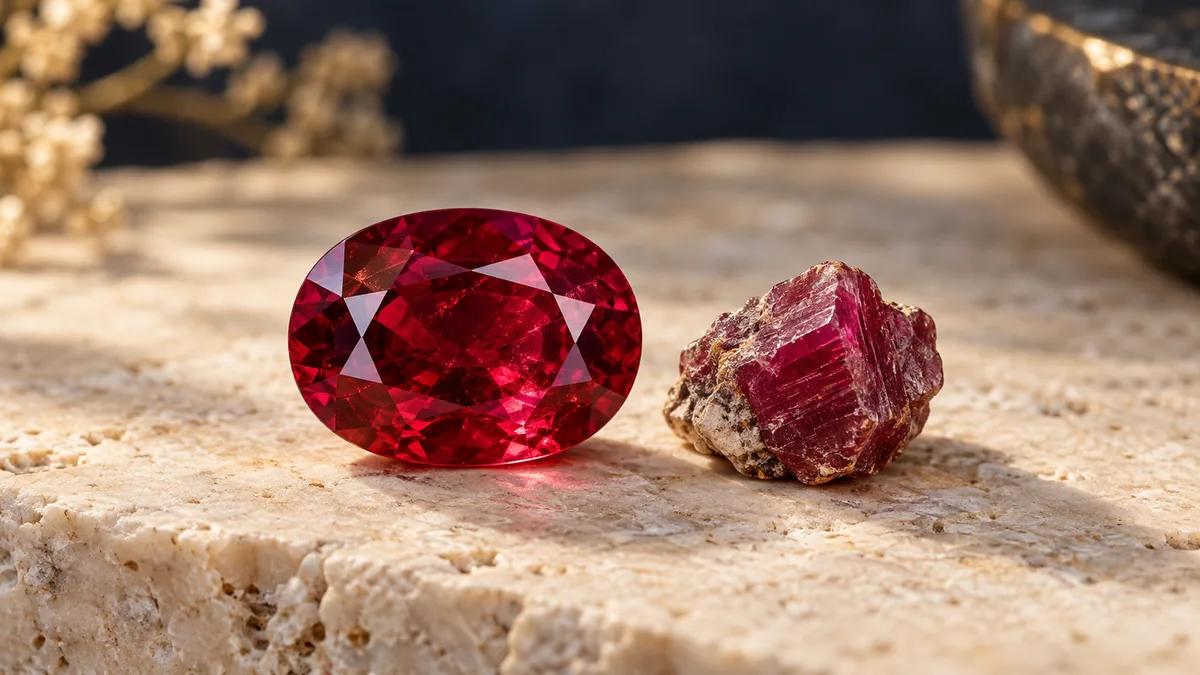
A ruby photographed against black under strong light can look different when worn indoors. Before comparing prices, compare the viewing conditions and the information accompanying each stone.
Red has several components
Ruby is the red variety of corundum, with chromium contributing to its colour. Visual assessment considers hue, lightness or darkness and colour intensity. A very dark stone is not automatically better because it is described as intensely red. Transparency and the inclusions affecting it also matter.
How to view it before buying
Observe the ruby face-up, then turn it slowly. Look for persistently dark areas and regions where the background is excessively visible. Ask to see it in ordinary lighting. A useful photograph shows the whole stone rather than just a favourable angle.
When comparing two rings, note the stone dimensions and their height above the finger. A low or high setting may matter more for wear than a small weight difference. This preference is not a general verdict on quality.
What the offer should clarify
- Whether the ruby is natural or laboratory-grown.
- Declared treatments and supporting documentation.
- The stone's weight separately from the jewellery's total weight.
- The conditions for verification and return.
A poetic colour description cannot replace this information. Read about ruby treatments or explore ruby valuation.
Sources and further reading
Research: 16 September 2026. An informative editorial guide; identifying a gemstone requires examination of the individual specimen.