Natural pearls, cultured pearls and imitations: three different categories
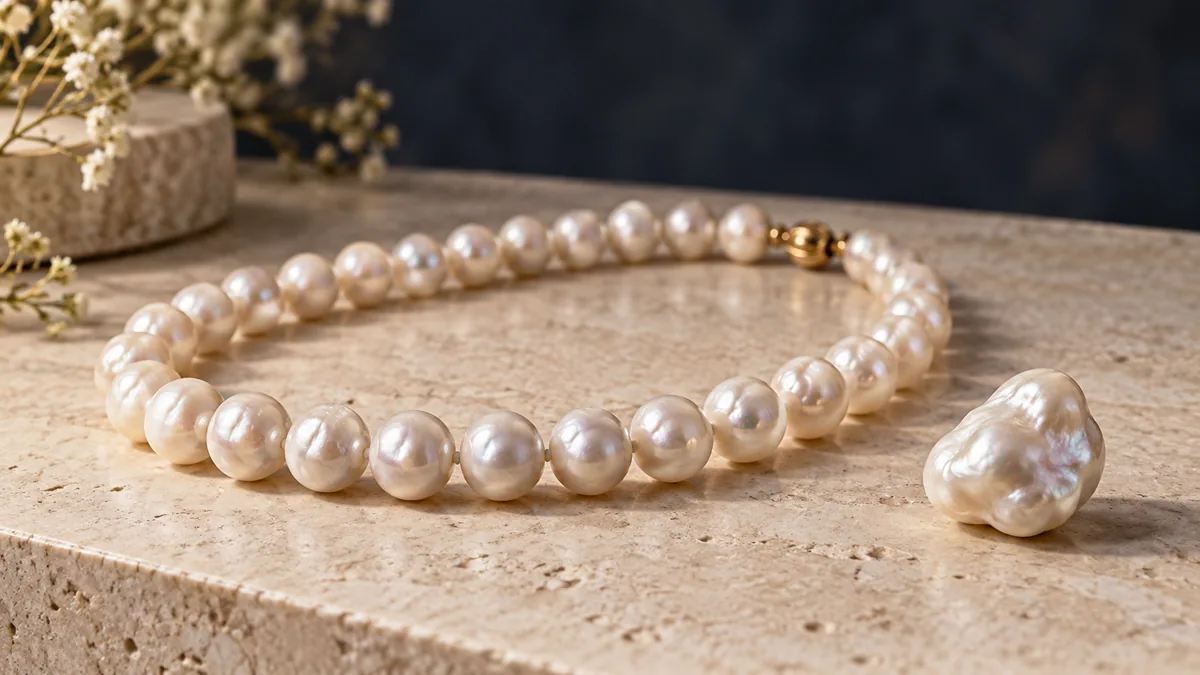
“Real pearls” is too vague for a serious offer. It can obscure the distinction between natural formation and cultivation, although both involve living organisms. Request a precise description first.
The three categories
Natural pearls form without the human intervention initiating pearl culture. Cultured pearls form in molluscs with human intervention. Imitations are materials reproducing a pearl's appearance. A cultured pearl is not an imitation merely because people initiated the process.
What examination can establish
Exterior appearance alone cannot reliably separate every category. Laboratories can examine internal structure using techniques such as radiography. Improvised tooth-rubbing tests provide no documented identification and may damage the surface or strand.
For an inherited necklace, photograph the whole item, clasp and existing documents. Do not remove a pearl to drill it or inspect inside. Age and clasp metal provide context but do not prove pearl category.
Describing a necklace
A good description separates pearl type, dimensions, shape, surface appearance and strand condition. For cultured pearls, ask about freshwater or saltwater formation and disclosed treatments. Irregular shapes do not prove natural formation, nor do round shapes prove imitation.
Quality remains a separate question after identification. Read about pearl lustre, surface and care. For an unclear origin, request gemmological identification.
Sources and further reading
Research: 16 September 2026. An informative editorial guide; identifying a gemstone requires examination of the individual specimen.