Peridot: olivine green and what to look for in jewellery
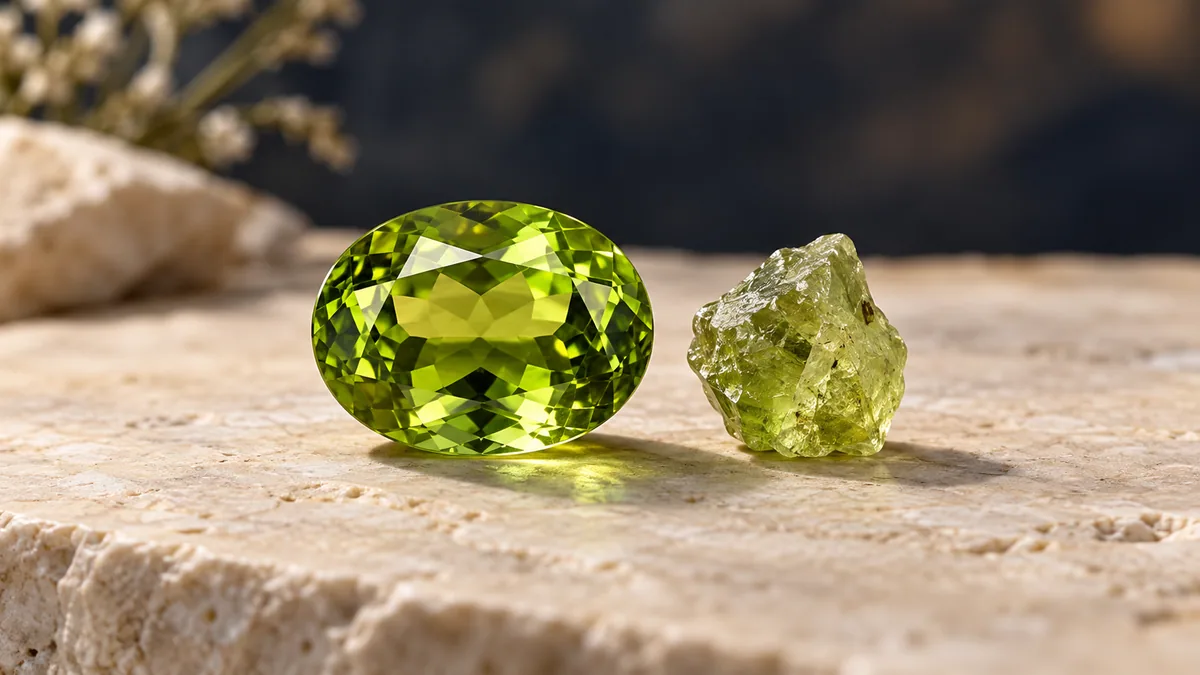
Peridot offers a distinctive green, often with a yellowish component. It can be expressive even without a particularly large stone.
What is peridot?
Peridot is gem-quality olivine, known for yellowish-green to green colours and varied geological occurrences. Olivine's presence in meteorites does not mean a shop's peridot has meteoritic origin. Such a claim needs separate evidence.
View green in ordinary light
Compare stones on the same background. Observe colour against skin and whether dark zones dominate face-up. Request dimensions and side photographs when buying online.
For earrings, view the pair together: equal weights can have different outlines. For a pendant, compare colour beside the chosen metal and clothing you commonly wear.
What appearance cannot prove
Colour alone cannot reliably identify material. A photographed inclusion does not automatically prove provenance. If paying for special origin, ask which document supports it and whether it matches the offered stone.
A family name for an old green stone provides context rather than a verdict. Stone identification can clarify it. Explore green garnets for other green shades.
Sources and further reading
Research: 16 September 2026. An informative editorial guide; identifying a gemstone requires examination of the individual specimen.