Hydrophane opal: why water can temporarily change its appearance
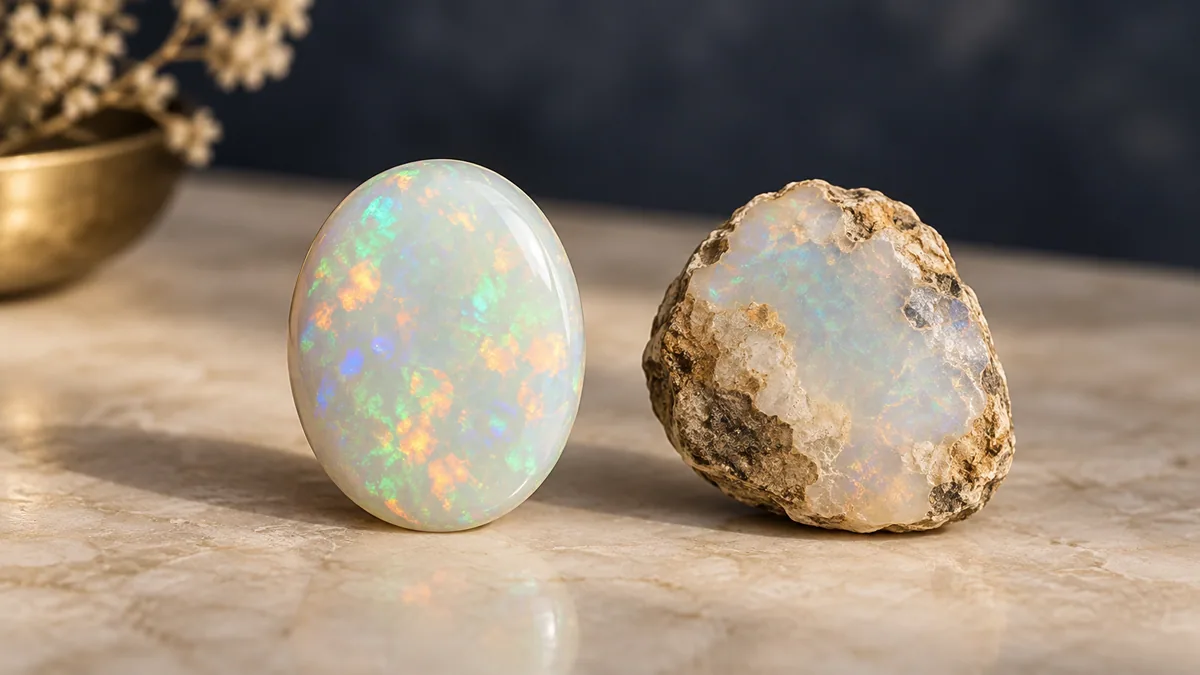
If an opal changes appearance after contact with water, hydrophane behaviour is one possible explanation. The term describes a material property, not a quality grade or a synonym for every Ethiopian opal.
What hydrophane means
Hydrophane opal is porous enough to absorb water, potentially changing transparency and colour appearance. Many Wollo opals from Ethiopia show this behaviour. The reaction alone cannot establish full identity, origin or absence of treatments.
After an appearance change
Keep jewellery away from heat sources in stable ambient conditions. Do not accelerate drying with a hairdryer, radiator or strong sun. High temperatures and abrupt changes can affect opal. Persistent changes or cracks call for examination.
Do not reproduce laboratory experiments at home. A loose research stone and jewellery with adhesives, metal and unknown treatments are different situations. Avoid proposed oil treatments to intensify colour too.
Before buying
- Is hydrophane behaviour disclosed?
- Have colour treatments or impregnation been applied?
- Is it solid opal or layered construction?
- What care instructions suit this item?
Explain these properties before choosing a gift for frequent wear, because they affect daily use. See solid opal, doublets and triplets: construction and porosity are separate questions.
Sources and further reading
GIA — gemmological reference · GIA — gemmological reference
Research: 16 September 2026. An informative editorial guide; identifying a gemstone requires examination of the individual specimen.