Amber, copal and imitations: why an insect is not proof
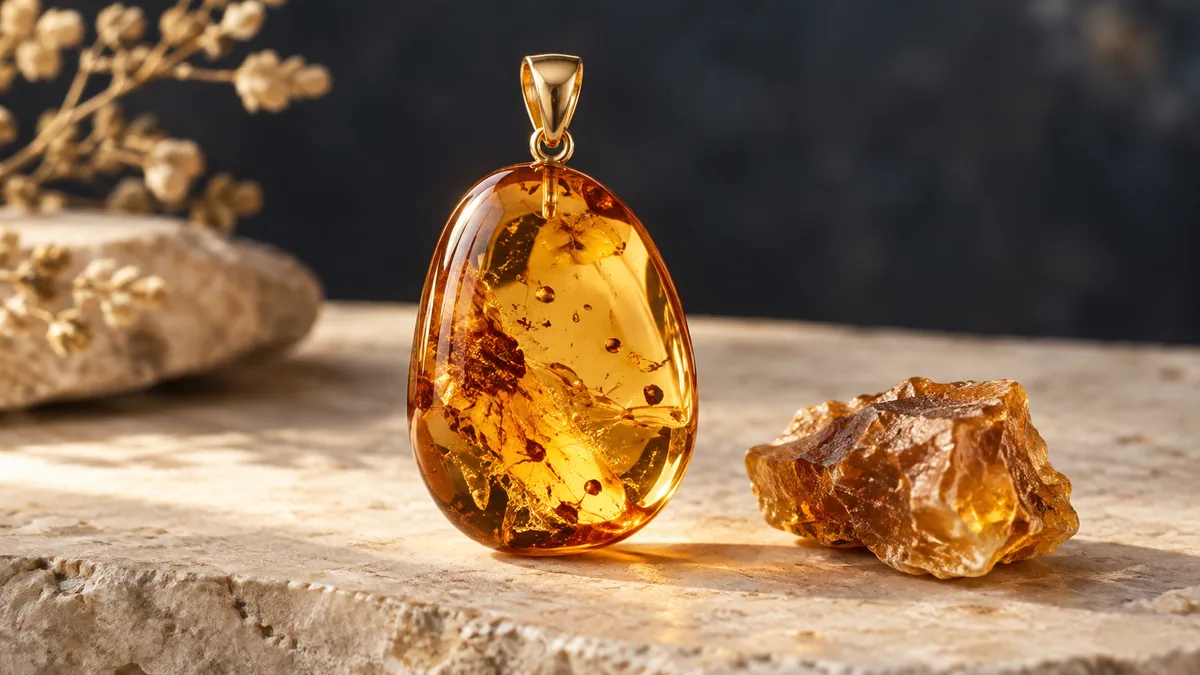
A translucent fragment containing an insect can be fascinating. Identification must verify the story in the material itself rather than infer it from appearance.
What is amber?
Amber is fossilised resin, an organic jewellery material. Copal is less mature resin and should not automatically be presented as equivalent to amber. Artificial imitations can reproduce colour and apparent inclusions.
Why avoid hot-needle tests?
Heating or piercing can leave permanent marks. Floating in a homemade solution cannot fully identify jewellery with settings, adhesives or unknown treatments. A viral demonstration cannot replace examination.
For an insect-bearing item, request detailed photographs and provenance. Striking appearance does not prove the inclusion is ancient or naturally formed in the material. A valuable collection specimen may need additional inclusion expertise separate from resin identification.
Keeping useful information
Archive the invoice, images and exact description. Record repairs or gluing. Photograph a complete necklace before restringing so the element order can be preserved.
Choose amber for appearance and documented history, not therapeutic promises. Request material examination if identity is uncertain. Read about pearls for another organic jewellery material.
Sources and further reading
Research: 16 September 2026. An informative editorial guide; identifying a gemstone requires examination of the individual specimen.