Alexandrite: observing colour change and understanding its limits
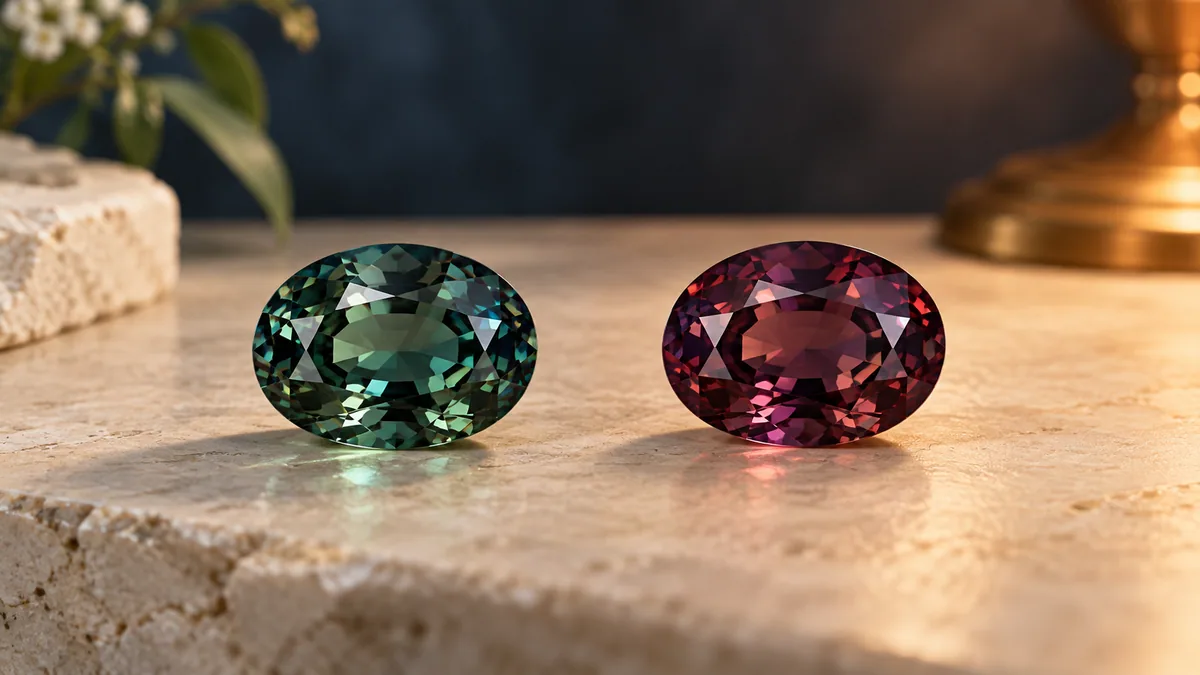
Alexandrite is known for colour change. This makes it striking in photographs but difficult to judge accurately when lighting conditions are unexplained.
What kind of gemstone is it?
Alexandrite is a chrysoberyl variety. It can appear green in daylight and reddish under incandescent light, with varying hues and strength of change. Fine natural specimens are rare. Laboratory-produced alexandrite and other colour-change materials also exist.
Request a continuous comparison
A video showing the same stone between two specified light sources is more useful than separately processed photographs. Observe both the change and how attractive it is under each light. An arbitrary LED need not reproduce incandescent demonstration lighting.
For a ring, view it in lighting where you will wear it most. You might prefer a particular daylight hue even if another stone changes more dramatically. Preference and identification are separate questions.
What documents to request
The report should identify the material and state natural or laboratory-grown origin. “Colour change” alone is insufficient. Do not infer geographic origin from colour or assume old jewellery necessarily contains natural alexandrite.
For an undocumented stone, start with gemmological identification. Keep the demonstration video as an appearance reference alongside the item's documents.
Sources and further reading
Research: 16 September 2026. An informative editorial guide; identifying a gemstone requires examination of the individual specimen.