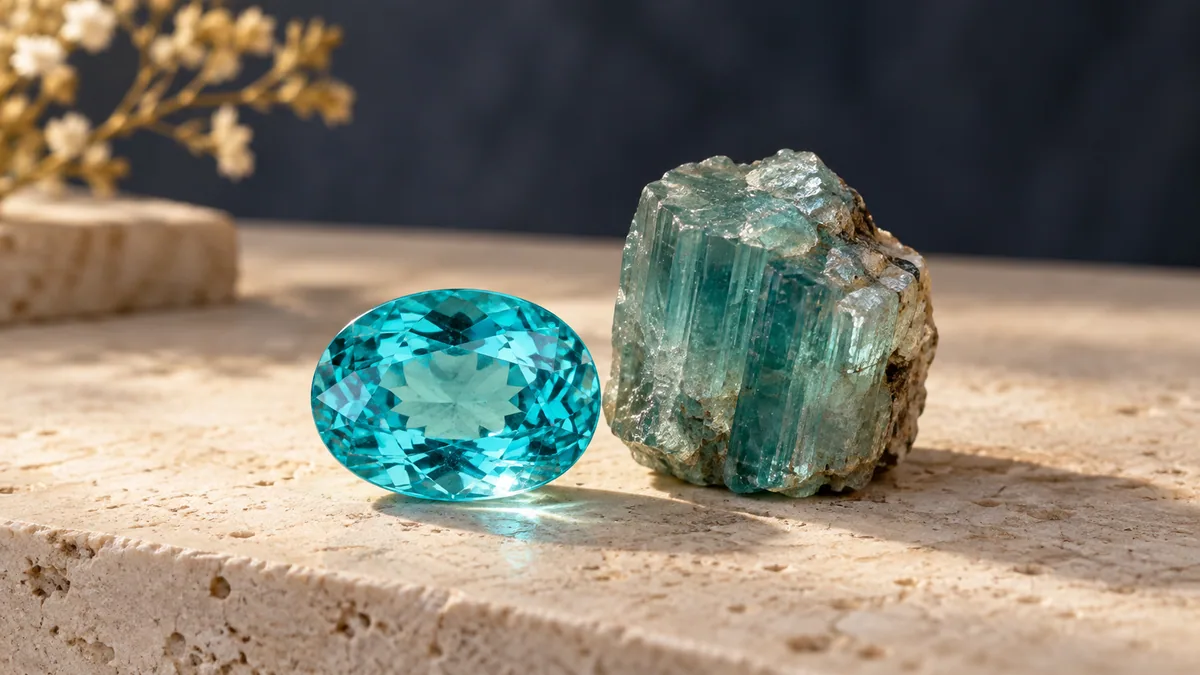
Aquamarine: choosing a blue you enjoy beyond the photograph
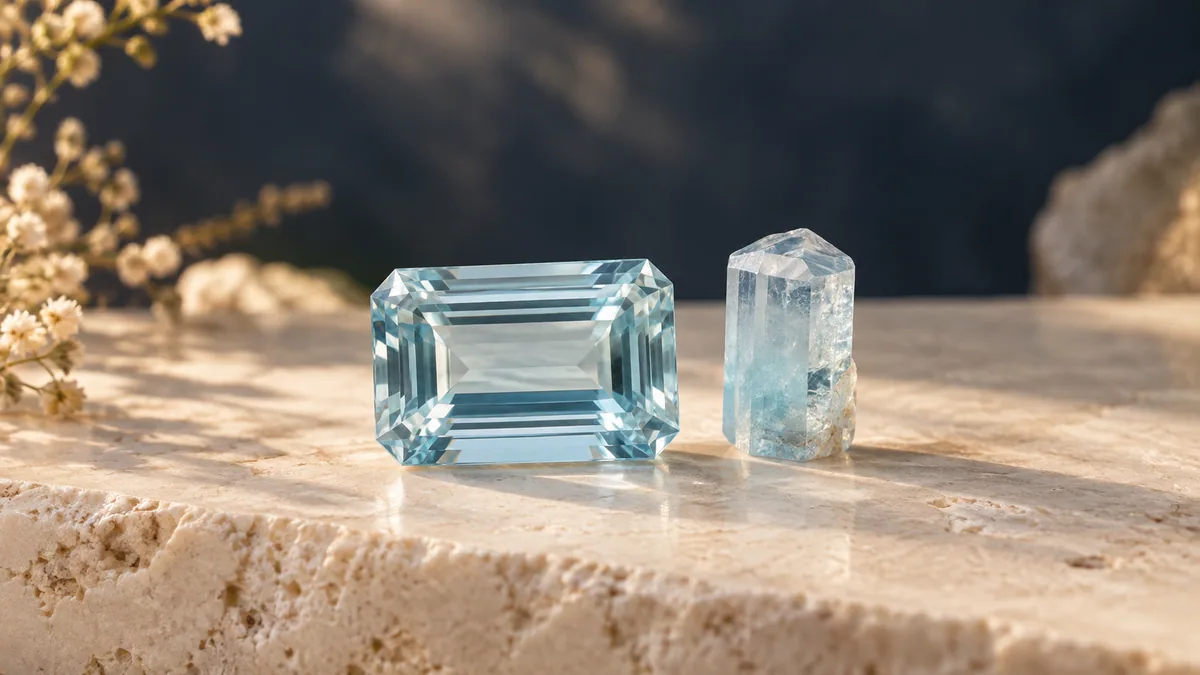
Aquamarine appeals through airy shades. A large stone photographed against blue may create different expectations from the same gem in an open setting against skin.
What defines aquamarine?
Aquamarine is a beryl variety ranging from blue to greenish blue. Transparency and visual clarity contribute to appearance. Crystals can yield large cut stones, so size alone is insufficient to assess an offer.
Comparable viewing conditions
Request a neutral-background photograph and one in the seller's hand, with lighting specified. In a video, observe whether the centre seems excessively transparent relative to the rest. Compare length, width and depth, not just carats.
For a ring, try a similarly sized model before ordering. A long rectangular stone can occupy more finger space than an isolated photograph suggests. For a pendant, check whether the hue remains visible beside the chosen metal.
Describe the actual stone
Ask about treatments and material identification. The trade term “Santa Maria” should not automatically be interpreted as proof of a particular mine. Separate colour description from origin claims.
If comparing blue gems, read sapphire, tanzanite and aquamarine. For an existing item, begin with stone identification.
Sources and further reading
Research: 16 September 2026. An informative editorial guide; identifying a gemstone requires examination of the individual specimen.