Moonstone: adularescence and choosing a cabochon
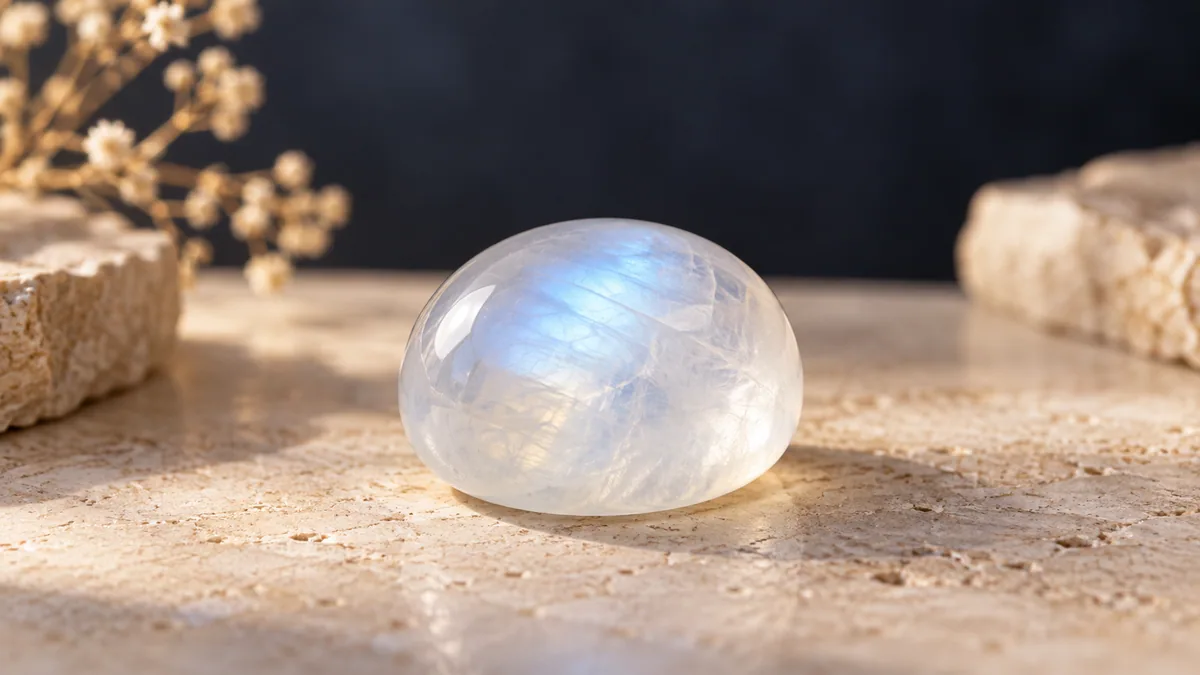
Moonstone is admired for light that seems to float beneath the surface. The effect is most apparent in motion; a front photograph may capture only part of it.
How the glow appears
Adularescence results from light interacting with fine feldspar structures. Moonstone is classically associated with orthoclase, although similar effects occur in other feldspars. “Rainbow moonstone” is a trade name used for material in the labradorite family; commercial names should accompany identification.
What to observe
Rotate the cabochon and assess how readily the glow appears, how far it extends and whether it is visible in wearing position. An effect photographed at an extreme angle may be difficult to see in a ring.
Also observe the body: transparency, hue and visible lines. These contribute to appearance but are not a diagnosis of fractures. For a closed setting, request side views and condition information.
Design around the effect
For earrings, check whether both stones glow in compatible orientations. Establish cabochon positioning before mounting a pendant. Not every blue reflection identifies the same mineral.
Another feldspar gemstone is sunstone, with a different effect. Gemmological identification resolves ambiguous names.
Sources and further reading
Research: 16 September 2026. An informative editorial guide; identifying a gemstone requires examination of the individual specimen.