Morganite rings: delicate pink, dimensions and choosing a setting
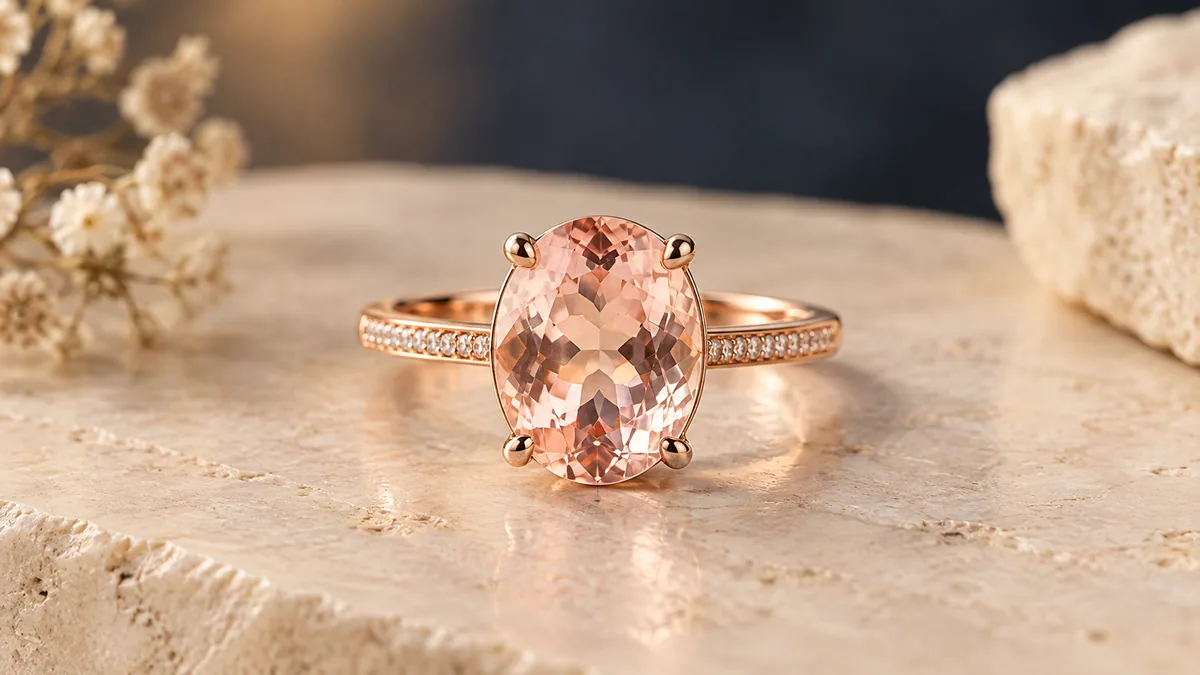
Morganite often appears in warm-toned settings where stone and metal complement one another. For an informed choice, try viewing them separately too.
A pink variety of beryl
Morganite belongs to the same mineral family as emerald and aquamarine. Its pink-to-orangy-pink colour is associated with manganese. Intense shades are less common, and a larger stone may show colour better than a smaller one. This does not make every large morganite superior.
Compare stone and setting
Request a neutral-background view, then one beside the chosen metal. If the offer shows only rose gold, do not assume the entire colour impression comes from the stone. Check ordinary lighting without warm filters.
For an engagement ring, note dimensions and setting height. A broad centre can be attractive but must be comfortable between fingers and beneath gloves. Consider this practical trial rather than only the top view.
Remaining questions
Request identity and disclosed treatments. “Natural pink stone” is insufficient because other materials can look similar. Membership of the beryl family does not justify automatically applying emerald trade conventions.
Keep the documents and a setting photograph. If comparing pink gems, read about kunzite and colour sensitivity. For unidentified jewellery, request gemmological examination.
Sources and further reading
Research: 16 September 2026. An informative editorial guide; identifying a gemstone requires examination of the individual specimen.